 RaftWorks
Reply qualification while you sleep
An AI Lead Assistant reads every WhatsApp reply as it lands, qualifies it against the campaign’s criteria and hands the real ones to a rep.
See it in Tedy.aiAssistants that qualify replies overnight, read a client's financials into a schema, turn a voice note into a filed report, or answer staff inside the tool they already use. Wired into your data, wrapped in guardrails, logged end to end, shipped in two to three weeks.
Free call · Fixed-scope quote within 48h
None of them is a chatbot on a landing page. Each does a job someone used to do by hand.
An AI Lead Assistant reads every WhatsApp reply as it lands, qualifies it against the campaign’s criteria and hands the real ones to a rep.
See it in Tedy.aiUpload a client’s statements. The model extracts the figures into a schema a broker can correct, then ordinary code calculates DSCR and ranks 13 lenders. About 90 minutes became about 10.
See it in PetranEncrypted contracts arrive, an engine sweeps 20 risk categories with confidence-scored flags, key terms are compared across clauses, and reports come out in three languages.
See it in Nova DiligenceA scheduling assistant for multi-location practices handles time-off, swap and overtime requests and coverage questions inside the workspace the manager already uses.
See it in Clinical StackHold to record on a jobsite. Transcription tuned for construction terms, then AI fills the daily report across 25+ templates and files it per project.
See it in Field SmartA markets dashboard with a market-regime read and an AI analyst column that summarises the day twice, archived and searchable.
See it in MacroPulseEvery one documented end to end: the problem, the build, the result. Filter the case studies.
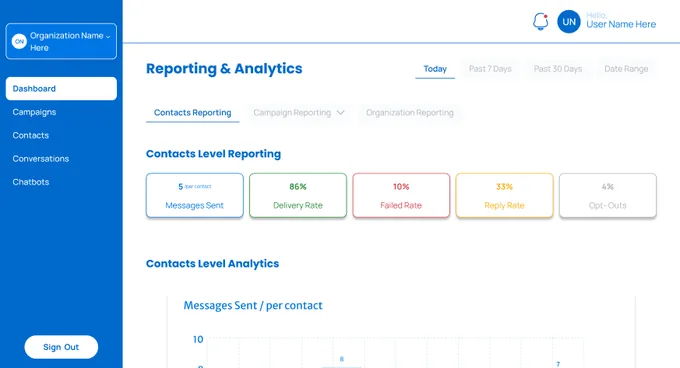
A multi-organization WhatsApp campaign platform, every workspace gets its own Twilio number, an AI Lead Assistant qualifies replies the moment they land, and a credit-based plan keeps the…
Read the case study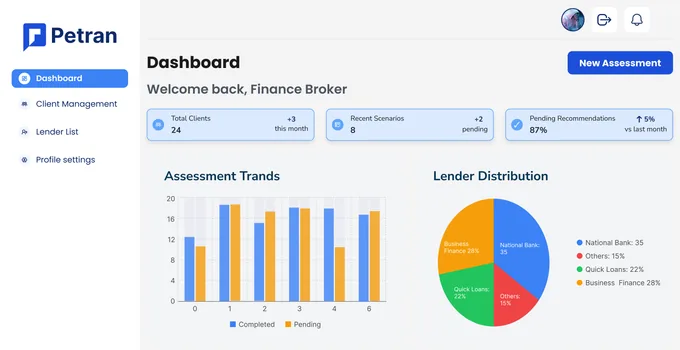
An AI-assisted finance broker platform. Upload a client's statements, extract the numbers with an LLM, calculate DSCR, and match the scenario against a live rate-card of lenders, all…
Read the case study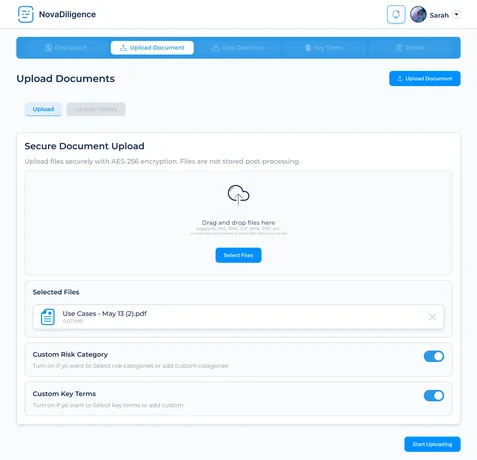
A due-diligence workspace for legal teams, AES-256 encrypted upload, AI risk detection across 20 categories, key-term extraction with clause comparison, and multi-language PDF reports…
Read the case study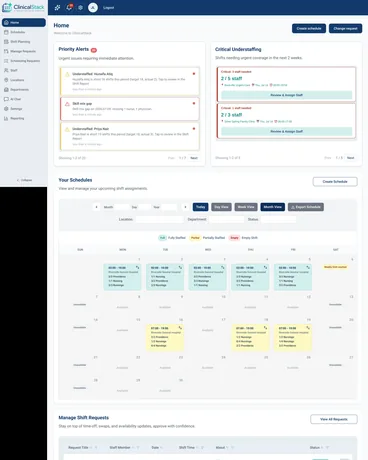
An AI-powered scheduling platform for multi-location medical practices. A Home command center surfaces understaffing and priority alerts; Schedules and Shift Planning build and publish…
Read the case study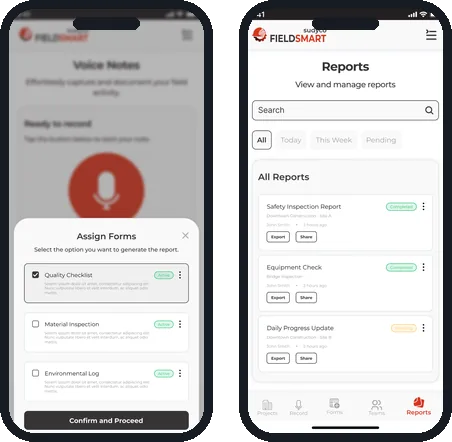
A mobile-first construction documentation platform, voice-to-form for the jobsite, multi-language ready, with AI extraction of crew, time, activity, and RFIs, then per-project filing and…
Read the case study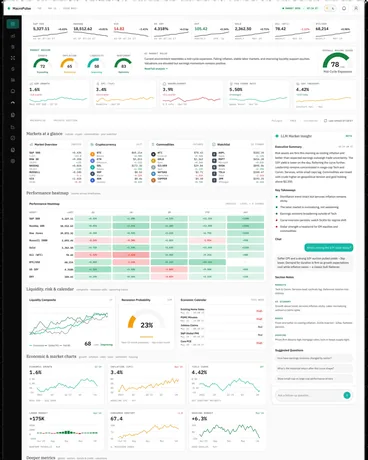
A Koyfin-class personal markets dashboard. Forty-plus live metrics across stocks, crypto, commodities, macro, credit, and housing on one surface, with a market-regime read, per-ticker…
Read the case studyThe pattern behind every agent we have shipped is the same split. A language model is excellent at reading messy input (a P&L, a WhatsApp reply, a voice note, a 40-page contract) and turning it into structured data or a draft. It is a poor place to put a decision that involves money, eligibility or an irreversible action. So the model extracts and proposes; deterministic code scores, ranks and validates; a person approves anything that cannot be undone.
In Petran the LLM never picks the lender. In Project ATS the model drafts interview questions and the hiring manager approves them. In Tedy.ai the assistant qualifies, the rep closes. That split is what makes the results explainable to a client, an auditor or a regulator.
Every agent we ship logs each step with its inputs, outputs and the prompt version that produced them, so a surprising result can be traced instead of guessed at. Irreversible steps (sending money, deleting records, messaging a customer) go through a human approval or a strict allow-list. Prompts are versioned and evaluated against a set of real cases before they change, the way code is tested before it deploys.
Data handling is scoped up front: what the model may see, what is redacted, what is retained. Nova Diligence does not retain files after processing; Clinical Stack keeps PHI inside a HIPAA-aware perimeter.
An assistant that can only talk is a demo. One that can look up the customer, read the calendar, create the record and send the message is a product. Most of the work in an agent sprint is giving the model safe, well-described tools over your real systems (CRM, calendar, database, messaging, documents) and the retrieval it needs to answer accurately from your own data.
We use whichever model fits the job (Claude, OpenAI, Whisper for speech) behind an interface you own, so a better model next year is a configuration change rather than a rebuild.
A qualification assistant runs headless inside a messaging pipeline. A voice-to-form pipeline has a single button. A scheduling assistant lives inside an existing screen. A prompt-and-result interface is one option among several, and we choose based on where the work happens, not on what looks impressive in a demo. The AI Agent Sprint covers either shape, plus the automation workflows around the agent.
Fixed scope, a demo every Friday, and a first clickable version around day 7. The full process is on the home page.
For teams adding an assistant, copilot or AI feature to how they already work, inside a new product or an existing one.
2 to 3 wksAdd-onsRetrieval over your documents · voice input · multi-language · monthly tuning retainer
Fixed scope · Fixed price
Demo every Friday
Everything else gets answered on the scoping call.
Anything that involves reading messy input and producing structured output or a draft at volume: qualifying replies, extracting fields from documents and speech, flagging risk in contracts, answering staff questions from your own data, writing first drafts of reports and questions. The six products above each replaced a manual job.
Three ways. Retrieval, so answers come from your data rather than the model’s memory. Structured outputs, so the model fills a schema instead of writing prose. And a split where the model extracts or proposes and deterministic code validates and decides. Plus logging and an evaluation set, so drift is caught.
Claude and OpenAI models for reasoning and extraction, Whisper for speech, chosen per job and swappable behind an interface you own. We build with Claude Code and Cursor day to day, so the tooling is not new to us.
No. We use the providers’ API terms that exclude training, scope what the model may see, redact what it does not need and set retention explicitly. Where the data is regulated we keep it inside the appropriate perimeter.
An agent wired into your tools with guardrails and logging ships in two to three weeks as a fixed-scope, fixed-price sprint, quoted within 48 hours of the scoping call. Price is driven by the number of tools and data sources, the interface and whether it sits inside a new product.
Agents drift as inputs change. Most clients keep a light retainer for prompt tuning against real cases, cost monitoring and new tools as the job expands. Everything stays in your accounts.
Bring the workflow, rough is fine. Thirty minutes, an honest read on what AI should and should not decide, and a fixed-scope quote within 48 hours.