 RaftWorks
SaaS MVPs that take payment on day one
Accounts, roles, the core workflow, Stripe billing and an admin view. Nova Diligence went from sign-up to first encrypted upload as a legal-AI workspace with subscriptions.
See it in Nova DiligenceAuth, data model, payments, admin and the two or three features that matter, shipped as a coded product you own. A clickable version around day 7, a demo every Friday, and a fixed price before we start.
Free call · Fixed-scope quote within 48h
Each one links to a shipped product, with the build documented end to end.
Accounts, roles, the core workflow, Stripe billing and an admin view. Nova Diligence went from sign-up to first encrypted upload as a legal-AI workspace with subscriptions.
See it in Nova DiligenceA bookkeeping firm kept its workflow in QuickBooks while clients got live reports, a document vault and Stripe-billed subscriptions through one ledger.
See it in TrupennyA three-step requisition wizard, a five-state approval pipeline and a chat thread on every line item replaced an email-and-spreadsheet ritual for a procurement team.
See it in VementeFour roles, nine screens and a live Apollo.io sync replaced a Friday spreadsheet for an outbound agency. Every number the client sees is the number commission is computed from.
See it in XDRhubForty-plus live metrics across six asset classes, per-minute refresh, decades of history and an AI analyst column on one surface, built on Next.js 16.
See it in MacroPulseInherited a half-built or fragile app? We audit it, stabilise what is there, then ship the roadmap in feature sprints. If a rebuild is cheaper than a repair, we say so with numbers.
Every one documented end to end: the problem, the build, the result. Filter the case studies.
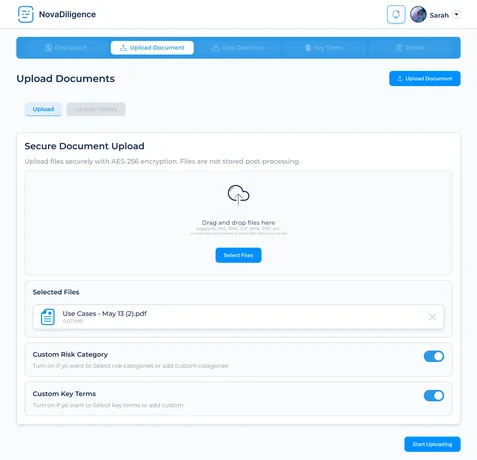
A due-diligence workspace for legal teams, AES-256 encrypted upload, AI risk detection across 20 categories, key-term extraction with clause comparison, and multi-language PDF reports…
Read the case study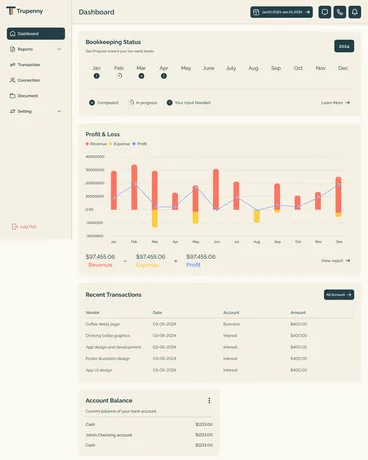
A done-for-you bookkeeping firm needed a client portal that didn't feel like a 1995 web form. We built one, QuickBooks-synced reports, secure document vault, Stripe-billed subscriptions…
Read the case study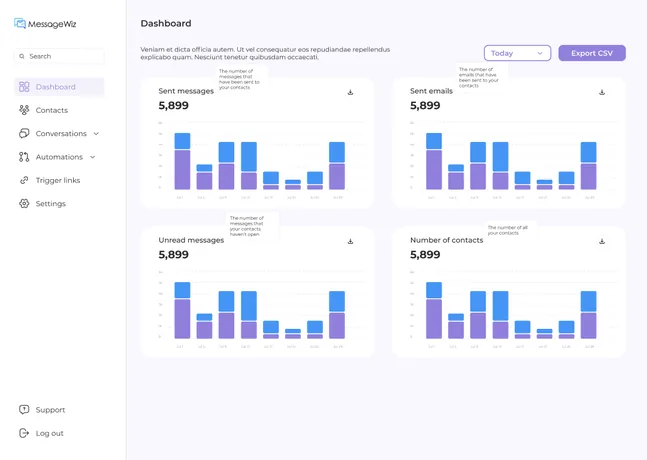
A B2B messaging SaaS that lets a small team buy a phone number, import a contact list, and run bulk SMS + email campaigns from one inbox, without stitching Twilio, SendGrid, and a…
Read the case study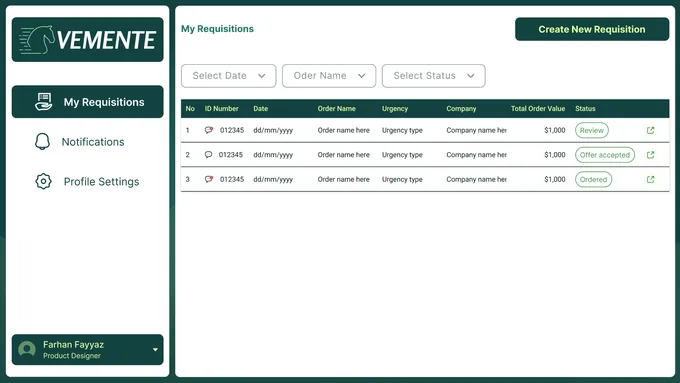
Operations teams need to request things. Procurement teams need to track them. We replaced the email-and-spreadsheet ritual with a proper requisition workflow, multi-step submission…
Read the case study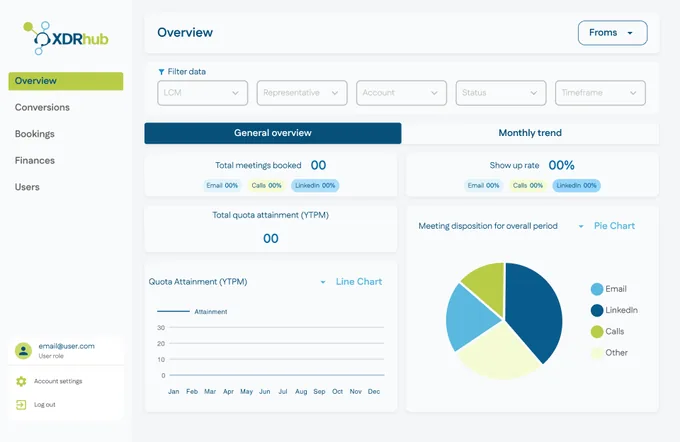
A four-role analytics platform that replaced a Friday-afternoon Google Sheet. Apollo.io syncs prospects in. Admins reconcile bookings against client disputes. Account managers see…
Read the case study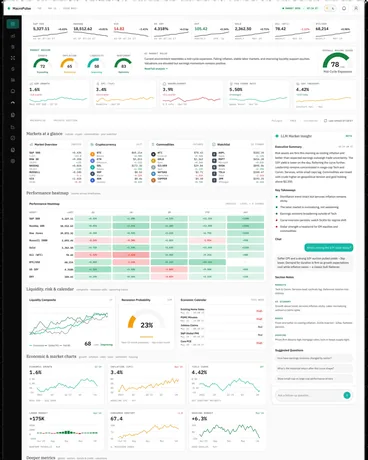
A Koyfin-class personal markets dashboard. Forty-plus live metrics across stocks, crypto, commodities, macro, credit, and housing on one surface, with a market-regime read, per-ticker…
Read the case studyThe failure mode of most first versions is not too little; it is too much, spread thin. We scope to the flows a user or an investor needs to see working: sign up, do the core thing, pay or invite someone. Around those flows the boring parts are built properly from the start (auth, roles, a real data model, an admin view, error states), because they are cheaper to get right in week one than to retrofit in month three.
The scoping call produces a written scope and a fixed price within 48 hours. If the scope changes mid-sprint, the price changes in writing before the work does.
Most products ship as coded builds: a React or Next.js front end, a Postgres database (usually Supabase), Stripe for money, deployed on Vercel or Cloudflare. That stack is boring on purpose. It hires easily, scales without drama and does not lock you into anyone, including us.
For small, template-shaped builds, a low-code platform like Bubble can be genuinely quicker, and we still hold a Bubble Silver Partner certification. We recommend a stack on the scoping call and tell you why, in plain language, with the trade-offs written down.
We build with Claude Code and Cursor. Agents handle the repetitive work: boilerplate, tests, migrations, refactors, the fourth CRUD screen. That is where the pace comes from. Architecture, data modelling, security and integration decisions are made by senior developers, and every change is reviewed by a human before it ships. You get senior-level output at a speed a traditional agency cannot match, and a codebase a human can read.
A monthly retainer gives you up to 30 hours of development, a dedicated developer plus a project manager, performance monitoring and async support over Slack and Loom. A feature boost is one to two weeks for two or three new features, UI improvements, performance tuning and documentation, on apps we built and apps we did not.
Whichever you choose, the product stays yours: your repository, your accounts, your data.
Fixed scope, a demo every Friday, and a first clickable version around day 7. The full process is on the home page.
Everything else gets answered on the scoping call.
You see a clickable version around day 7 and a working demo every Friday after that. MVPs typically ship in 3 to 4 weeks, portals and workflow tools in 3 to 5, marketplaces in 4 to 6. Every sprint is fixed scope, so there is no month-three surprise.
A deployed product on your own accounts, the repository, the database, documentation and a recorded walkthrough. Nothing is hosted on a RaftWorks account you cannot take with you.
Yes. Every build includes wireframes and key screens in week one. For a full brand, design system and product in one package there is a Design + Build sprint of 5 to 8 weeks with custom Figma design and a responsive component library.
Yes. We start with an audit, stabilise what is fragile, then ship the roadmap in feature sprints. If a rebuild would be cheaper than a repair we tell you, with the numbers, before either starts.
It is written to be. Agents produce the repetitive parts inside an architecture senior developers designed, every change is reviewed by a human, and the result is ordinary Next.js, Python and SQL that any competent team can pick up.
Fixed scope, fixed price. Book a free 30-minute call and you will have a scoped, written quote within 48 hours. Price is driven by the number of roles, integrations and flows in scope, not by hours.
Rough is fine. Thirty minutes, a stack recommendation in plain language, and a fixed-scope quote within 48 hours.