Work that runs itself, on rails you can see.

Lead routing, follow-up across WhatsApp, SMS and email, quote-to-invoice, CRM and accounting sync, reconciliation and reporting that writes itself. Zapier, Make or n8n when that is the fastest safe path, code when it has to be bulletproof.

Free call · Fixed-scope quote within 48h

Build sheetAutomations & integrations
Typical builds
Speed-to-lead follow-up systems, prospect sync from Apollo or Clearbit, nurture sequences, CRM to accounting sync, booking reconciliation, scheduled reporting, AI steps inside a workflow.
Timeline
1 to 2 weeks for a workflow in production with monitoring. Larger integration layers in 3 to 4.
Stack
ZapierMaken8nInngestTwilioQuickBooks · Stripe
Reliability
Every run logged. Retries and dead-letter handling on anything that touches money or a customer. Alerts on failure. One source of record per field, synced one direction.
Price
Fixed scope, fixed price, quoted within 48 hours of the scoping call.

What we automate most.

Five of these are inside shipped products. The rest run quietly for clients on Zapier, Make and n8n.

Speed-to-lead follow-up

Leads arrive from Meta forms, landing pages or cold campaigns and nothing happens for six hours. We build the machine that catches them: instant follow-up across channels, AI qualification, routing with escalation, attribution to the booked call.

See the WhatsApp version in Tedy.ai

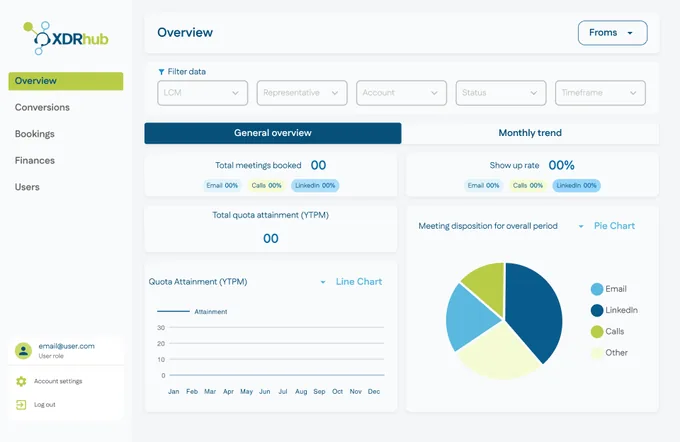
Prospect sync and reconciliation

Apollo.io prospects flow into one database, a daily job reconciles bookings against sequences and meetings, and disputes become a lookup with an audit trail.

See it in XDRhub

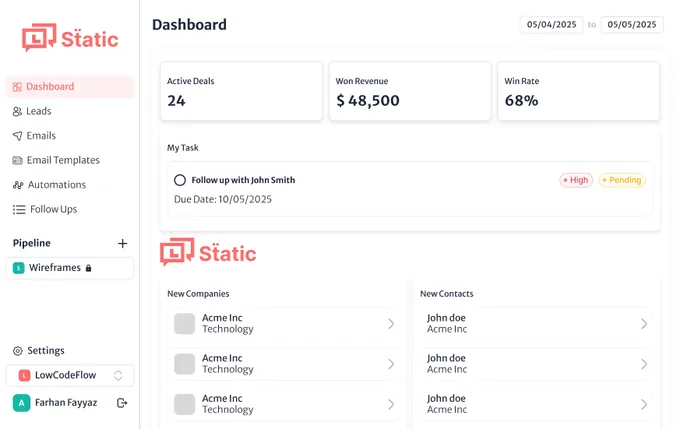
Nurture sequences without a sequence-builder degree

Email, delay, task: four-step sequences scheduled by Inngest, sends through Resend, enrichment on the way in, and a pipeline with four fixed stages.

See it in Static

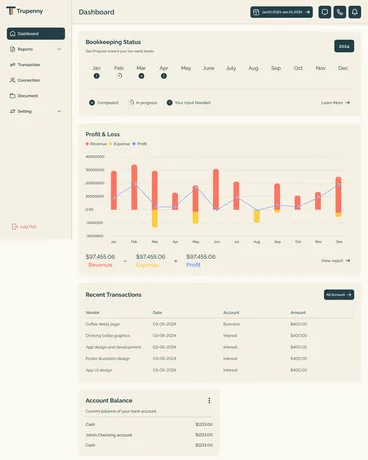
Accounting and CRM sync

QuickBooks, Plaid, Stripe and Zendesk bound through one ledger with a fifteen-minute sync, a visible timestamp, and about 90% of transactions auto-categorised.

See it in Trupenny

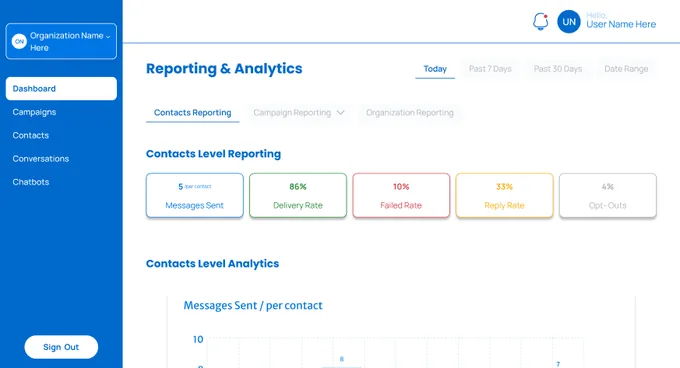
Campaign automations on one canvas

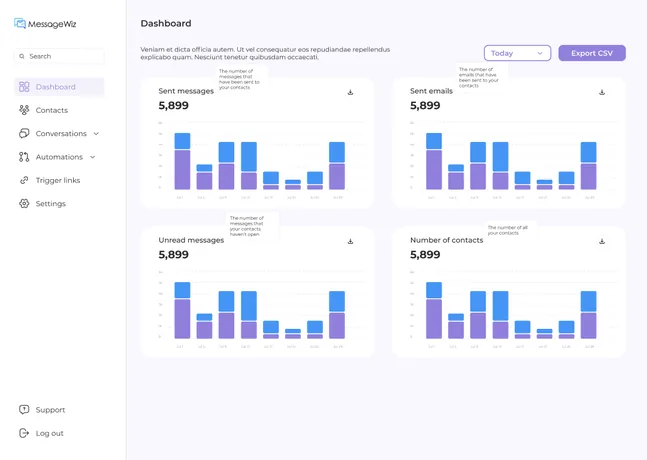
Write once, send to whichever channel converts: SMS and email sequences from one composer, replies into one inbox, automations on one canvas.

See it in MessageWiz

Reporting that writes itself

Scheduled reports assembled from CRM, billing, ad platforms and spreadsheets, delivered to Slack, email or a dashboard, so Monday starts with the answer.

Tool choice

Zapier, Make, n8n or code. The honest answer depends on what breaks if it fails.

For a workflow where a missed run is an inconvenience (a Slack notification, a spreadsheet row, a welcome email), Zapier or Make is the fastest safe path and we hold a Zapier Silver Solution Partner certification for a reason. For a workflow where a missed run costs money or a customer (payouts, reconciliation, a lead that must be answered in minutes), we want retries, dead-letter queues, idempotency and logs we control. That means n8n self-hosted or plain code with a scheduler like Inngest.

Keep reading

We tell you which on the scoping call, and we are comfortable saying a no-code tool is the right answer when it is. See our notes on Zapier vs Make in 2026 for how we think about it.

One source of record

Most broken integrations are two systems that both think they own a field.

Before any sync is built we map which system is the source of record for each field, and sync one direction per field. The CRM owns the contact, the accounting system owns the invoice, the booking tool owns the appointment. Two-way sync is reserved for the few fields that genuinely need it, with a conflict rule written down.

Keep reading

It sounds pedantic. It is the difference between an integration that runs for years and one that quietly duplicates records for a quarter before anyone notices.

Speed to lead

The economics of paid leads are decided in the first ten minutes after a reply.

Whether the leads come from Meta, Google, a cold WhatsApp campaign or an inbound form, the follow-up is where the money leaks. We build the system downstream of the click: capture wired straight into your stack, follow-up across WhatsApp, SMS and email, an AI step that qualifies replies overnight so reps only see the real ones, routing with escalation, and one dashboard that compares channels honestly. We do not run the ads; most clients keep their media buyer and hand us the system the leads land in.

Keep reading

Tedy.ai and MessageWiz are the productised versions. For a single business, the same thing runs as an automation layer in one to three weeks, and some clients keep us on monthly to tune templates, prompts and routing as campaigns change.

Operations

An automation nobody monitors is a surprise waiting for a quarter end.

Every workflow we ship logs its runs, alerts on failure and has a documented owner. Anything touching money or a customer gets retries and a dead-letter path so a failed step is queued and visible, never dropped. Handoff includes the runbook: what each workflow does, what to check when it alerts, and how to pause it.

Five steps, no month-three surprise.

Fixed scope, a demo every Friday, and a first clickable version around day 7. The full process is on the home page.

  1. Day 0 Scoping call Thirty minutes to map the product and pick the stack. Fixed quote within 48 hours.
  2. Week 1 Wireframes to a clickable version Screens, flows and the data model. On day 7 you click, not read.
  3. Weeks 2 to 3 Core flows, demoed every Friday Built and integrated in the open. You test on the real build.
  4. Week 4 QA, deploy, handoff Deployed to production with handoff docs and a recorded walkthrough.
  5. Ongoing Sprints as usage teaches you A retainer or feature sprints, monitored, async over Slack and Loom.

Asked before every automations & integrations build.

Everything else gets answered on the scoping call.

Ask us directly

It depends on what breaks if a run fails. For low-stakes workflows Zapier or Make is fastest. For anything touching money, customers or high volume we prefer n8n self-hosted or code with retries and logs you control. We are a Zapier Silver Partner and still recommend code when it is the honest answer.

Almost certainly. We have shipped Apollo.io, Clearbit, Twilio, SendGrid, Resend, QuickBooks, Plaid, Stripe, Zendesk, Google Calendar and Meta lead forms into production. If a tool has an API we can wire it in; if it does not, we tell you early and find the scheduled-import path.

No. We build and operate everything downstream of the click: capture, follow-up, qualification, routing and reporting. Most clients keep their media buyer, who tends to look better once the follow-up system exists.

Most ship in one to two weeks, including monitoring and a runbook. A full integration layer between several systems takes three to four. Fixed scope, fixed price, quoted within 48 hours of the scoping call.

Yes, as a step: qualify a reply, extract fields from a document or a voice note, draft a response for approval, classify a ticket. The model reads and proposes; the workflow and a person decide. See the AI agents service for the larger version.

It retries, then lands in a dead-letter queue with an alert, and nothing is dropped. The runbook says what to check. Clients who want us on call keep a monthly retainer.

Have a process that should run itself? Let us map it.

Bring the workflow, rough is fine. Thirty minutes, a tool recommendation with the trade-offs written down, and a fixed-scope quote within 48 hours.