 RaftWorks
Consumer apps with subscriptions
A wellness app with a 30-second front-camera pulse capture, four meditation spaces and a streak engine, live on both stores with a Stripe subscription and a seven-day trial.
See it in SelaveetaNative voice, camera and push where the product needs them, a shared codebase everywhere else, and the part most teams underestimate handled inside the sprint: TestFlight, store listings, review cycles and the rejection emails.
Free call · Fixed-scope quote within 48h
Four mobile products, each on iOS and Android from a single codebase.
A wellness app with a 30-second front-camera pulse capture, four meditation spaces and a streak engine, live on both stores with a Stripe subscription and a seven-day trial.
See it in SelaveetaHold the mic, speak, done: a family reminder app extracts five fields from speech in about four seconds, syncs two ways with Google Calendar and shares tasks by magic link.
See it in RemindHerA rental matching app with four user roles, a compatibility engine ranking properties by lifestyle fit, one-tap tour scheduling and deep links, live on the App Store.
See it in ReasyA construction documentation app: voice-to-form with AI extraction, 25+ templates, offline-first capture with deferred sync and eight direct integrations.
See it in Field SmartEvery one documented end to end: the problem, the build, the result. Filter the case studies.
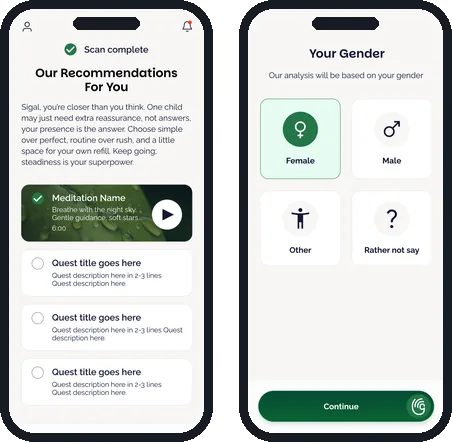
A holistic wellness mobile app with front-camera capillary-pulse capture, four meditation spaces (sleep, healing, stress, energy), streak rewards, and topic-driven readings.
Read the case study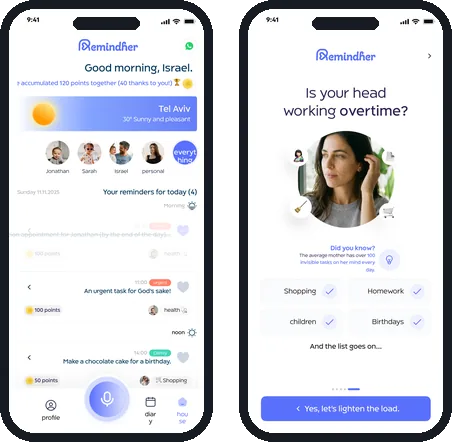
A voice-first family task system. Multi-language ready capture, AI field extraction, Google Calendar two-way sync, partner via shareable magic link, and a curated rewards store that pays…
Read the case study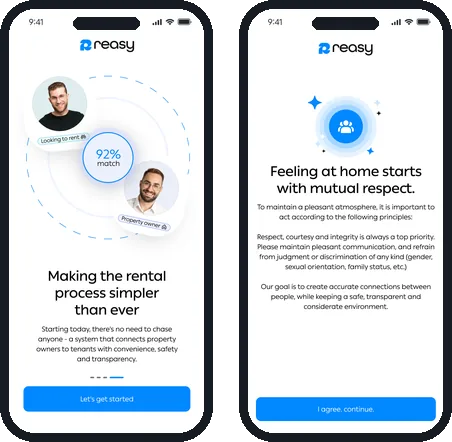
A mobile-first rental matchmaking platform with four user roles, multi-language support, and a compatibility engine that ranks properties by lifestyle fit, not keywords.
Read the case study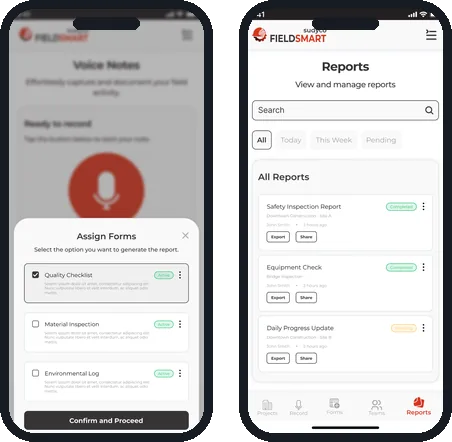
A mobile-first construction documentation platform, voice-to-form for the jobsite, multi-language ready, with AI extraction of crew, time, activity, and RFIs, then per-project filing and…
Read the case studyReact Native with Expo gives one codebase, one team and one release for both stores, and it covers nearly everything a startup needs. Where a feature depends on the hardware (camera-based pulse capture, on-device voice, background location) we reach for native modules or, in rare cases, Swift and Kotlin for that piece alone. The rest of the app stays shared, which is what keeps a four-to-six week timeline honest.
Selaveeta and RemindHer both shipped to iOS and Android together from a single cross-platform shell, with native voice and push where they mattered.
Apps get rejected for predictable reasons: a sign-in that cannot be tested, a subscription without the required terms, a privacy label that does not match the data collected, a deep link that opens nothing. We keep a review checklist from the first sprint, run a TestFlight and internal-testing beta with real devices, and handle the resubmission loop as part of the build rather than as a surprise after handoff.
Reasy went live on the App Store with deep-link handling, localised marketing copy and full multi-language support because those were in scope from the start, not bolted on for the listing.
Field Smart captures a full daily report on a jobsite with no signal and syncs it when the truck reaches the road. Offline-first capture, deferred sync and conflict handling are designed into the data model, because retrofitting them means rewriting the app.
The same care applies to push notifications, background refresh and battery: a frontline app that drains a phone by lunch does not get opened on Tuesday.
Digital goods and subscriptions inside an app go through the store’s billing; physical services and marketplaces can use Stripe. Choosing wrong is a rejection and a rewrite, so it is one of the first decisions on the scoping call. Trials, restore purchases, receipts and cancellation flows are part of the sprint.
Fixed scope, a demo every Friday, and a first clickable version around day 7. The full process is on the home page.
Everything else gets answered on the scoping call.
React Native with Expo by default: one codebase, both stores, and native modules where a feature needs the hardware. Flutter when a team already runs it. Fully native Swift and Kotlin only for the specific pieces that earn it. We recommend on the scoping call and explain why.
Yes. Listings, screenshots, privacy labels, review notes, TestFlight and internal-testing betas, and the resubmission loop if a reviewer pushes back. Store review is planned for from week one.
Four to six weeks to a beta build on real devices, then store submission. You click a prototype around day 7 and see a demo every Friday. Apps with hardware features, offline sync or multiple roles sit at the longer end.
Yes. A companion app reuses your existing backend and auth, and we scope it to the flows people actually want on a phone rather than porting every screen.
Yes, and it is far cheaper when planned from day one. Reasy, RemindHer and Field Smart all shipped with multi-language interfaces architected in, not retrofitted.
Fixed scope, fixed price, quoted within 48 hours of the scoping call. Price is driven by the number of roles and flows, hardware features, offline requirements and whether a backend already exists.
Bring the idea, rough is fine. Thirty minutes, a platform recommendation and a fixed-scope quote within 48 hours.