Staff scheduling software for clinics, built around your coverage rules.

We build custom staff scheduling software for multi-location medical practices: schedules built against your coverage rules, time-off and swap requests in one queue, and an alert the moment a shift is understaffed. It replaces the weekly scheduling spreadsheet and the WhatsApp requests around it.

Free call · Fixed-scope quote within 48h

Build sheetClinic staff scheduling
Replaces
A weekly scheduling spreadsheet, time-off requests on WhatsApp and coverage rules that live in the manager’s head.
Who uses it
Practice managers, providers, nurses and medical assistants across locations and departments.
Timeline
4 to 6 weeks to a scheduling tool in use across your locations.
Stack
BubbleGPT-4TwilioRole-based access
Compliance
HIPAA-aware: access scoped by role, scheduling data kept inside the practice’s perimeter.
Shipped
Clinical Stack
Price
Fixed scope, fixed price, quoted within 48 hours of the scoping call.

What it does.

Each feature below is running in production in the case study it links to.

Coverage built against your rules

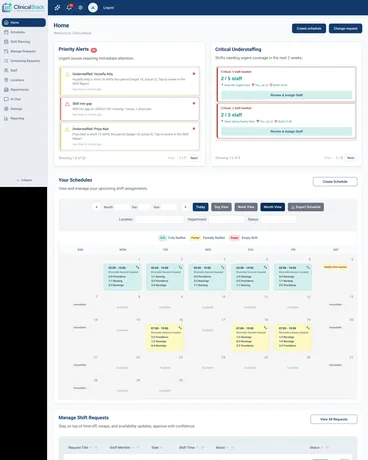
Minimum coverage per role per shift, certifications, hour caps and approved time off are set once in Settings. Shift Planning builds the schedule against them, and every shift shows as fully, partially or empty staffed.

See it in Clinical Stack
One queue for every request

Time-off, shift swaps and overtime arrive in a single queue with the staff member, dates and context, each behind an Approve or Decline gate, instead of scattered across messages.

Understaffing alerts on the home screen

A Home command center turns every coverage gap into a priority alert, so the manager sees what needs attention before the shift starts, not when someone calls in sick at 6am.

An assistant that answers in plain language

Ask “what needs my attention today?” and the AI assistant summarises pending requests, flags understaffing and can create schedules or assign staff on request.

Why spreadsheets break

Scheduling rules that live in one person’s head stop working when they take a holiday.

Most practices schedule in a spreadsheet that only one manager fully understands. The rules (who is certified for what, how many hours someone can work, which approved time off must be honoured) are applied from memory every week, and broken the moment someone else has to cover.

Keep reading

Moving those rules into software is the real value of a scheduling tool. Once coverage targets, shift types and roles live in Settings, every schedule, alert and report reflects them, and changing a rule changes the whole operation consistently across locations.

Reporting

Staffing decisions should rest on data, not gut feel.

A schedule is also a record. Reporting in Clinical Stack shows coverage against targets, understaffing by person and period, hours worked and the patterns behind the alerts, so a manager can see who is short of their target shifts and where the skill-mix gaps fall, and export it for review.

Five steps, no month-three surprise.

Fixed scope, a demo every Friday, and a first clickable version around day 7. The full process is on the home page.

  1. Day 0 Scoping call Thirty minutes to map the product and pick the stack. Fixed quote within 48 hours.
  2. Week 1 Wireframes to a clickable version Screens, flows and the data model. On day 7 you click, not read.
  3. Weeks 2 to 3 Core flows, demoed every Friday Built and integrated in the open. You test on the real build.
  4. Week 4 QA, deploy, handoff Deployed to production with handoff docs and a recorded walkthrough.
  5. Ongoing Sprints as usage teaches you A retainer or feature sprints, monitored, async over Slack and Loom.

Clinic staff scheduling: a fixed-scope build

For clinics, practices and care providers replacing paper, spreadsheets or phone tag with a tool built around how they work.

4 to 6 wks
  • Scoping call, written scope and a fixed price within 48 hours
  • Clickable version around day 7, then a demo every Friday
  • Roles and permissions for every type of user
  • Integrations with the tools you already run
  • Deployed to production with handoff docs and a recorded walkthrough
  • Code and data in your own accounts

Add-onsAI features · data migration from your spreadsheets · mobile app · monthly support retainer

Fixed scope · Fixed price
Demo every Friday

Scope it in one call

Asked before every clinic staff scheduling build.

Everything else gets answered on the scoping call.

Ask us directly

It applies your coverage rules automatically, collects time-off and swap requests in one queue, and alerts you to understaffed shifts before they happen. A spreadsheet only records what someone typed.

Yes. Locations and departments are set up once, and the schedule can be filtered by location, department and staffing status, so a multi-site group runs from one tool.

We build scheduling tools HIPAA-aware, with access scoped by role and data kept inside the practice’s perimeter. Whether your full setup is compliant also depends on your hosting agreements and policies, which we scope on the first call.

Yes. Staff submit requests, and the manager approves or declines each one from a queue that shows the dates and context before anything changes on the schedule.

Typically 4 to 6 weeks to a tool in use across your locations, as a fixed-scope, fixed-price build quoted within 48 hours of the scoping call.

Want one built around your team? Let us scope it.

Bring the spreadsheet or process you want to replace. In 30 minutes we map the tool, recommend a stack and send a fixed-scope quote within 48 hours.