AI and automation for finance teams, where the model reads and the rules decide.

We build AI and automation for lenders, brokers, bookkeeping firms and finance teams: extraction that turns a P&L into editable figures, books that sync themselves, and AI summaries grounded in your own numbers. A language model reads the messy input, ordinary code makes the decision, and a person can correct every figure.

Free call · Fixed-scope quote within 48h

Build sheetAI & automation for finance
Typical builds
Financial statement extraction for credit assessment, lender-matching rule engines, QuickBooks-synced client portals, receipt-to-transaction matching, AI-suggested categories, scheduled AI market summaries.
Timeline
2 to 3 weeks for an AI or automation layer on an existing workflow. 4 to 6 weeks inside a new product.
Stack
LLM structured outputsClaudeQuickBooks APIPlaidStripe BillingPostgres
Controls
Confidence score on every extracted figure, every figure editable, deterministic code for eligibility and ranking, sources timestamped and revocable, informational-only AI where advice rules apply.
Price
Fixed scope, fixed price, quoted within 48 hours of the scoping call.

Three finance jobs, now automated.

Each one replaced work someone did by hand, in a spreadsheet or an inbox.

Financial statements into a credit verdict

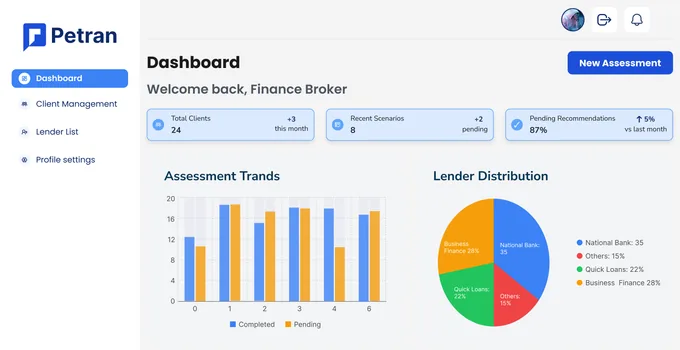
Drop in a P&L. An LLM at temperature 0 returns trading income, operating profit, depreciation, interest and non-trading income against a fixed schema, each with a confidence score the broker can override. Code then calculates DSCR and ranks 13 lenders. A 90-minute assessment now takes under ten.

See it in Petran
Bookkeeping that closes its own loops

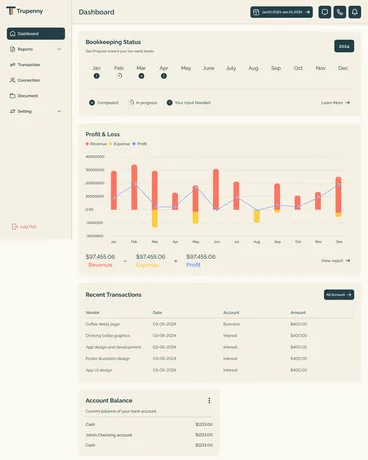
QuickBooks is the spine, bank feeds arrive through Plaid, and receipts attach to transactions by date and amount match. The bookkeeper works a queue with AI-suggested categories and confidence scores, while Stripe Billing handles proration, dunning and failed-payment retries.

See it in Trupenny

An analyst that reads your numbers

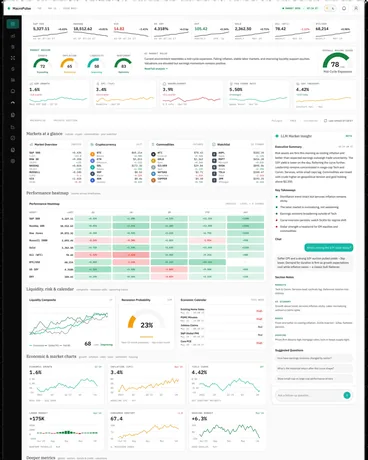
An AI column summarises the session, lists takeaways and answers questions grounded in the dashboard’s own data. Two scheduled jobs write a morning and an afternoon summary to a searchable archive. Informational only, no advice logic.

See it in MacroPulse
Reading, not deciding

In finance, the model reads the documents. It never makes the call.

Language models are very good at reading a scanned P&L, a bank statement or a receipt and turning it into structured figures. They are the wrong place for a lending, eligibility or payment decision, because the same input has to produce the same answer, and the reason has to be explainable to a client, a lender or an auditor.

Keep reading

So in Petran the extraction call runs at temperature 0 against a fixed schema, every figure carries a confidence score, and the broker can edit any of them. The decision that follows is ordinary code: Adjusted EBITDA, DSCR, then a filter over each lender’s thresholds. Same inputs, same shortlist, and the excluded lenders come with the reason they were excluded.

Sync you can trust

Automation must never show a half-updated number.

The risk with finance automation is not that it stops. It is that it keeps running with one source stale and nobody notices. In Trupenny every connection (QuickBooks, Plaid bank feeds, Stripe Billing, the document vault) shows its last-synced time and can be resynced in one click.

Keep reading

Revoke any one source and the product drops to a read-only state instead of showing a figure built from half the data. Every number on the dashboard can be traced from the total down to the single transaction and its linked receipt.

Grounded AI summaries

A summary is only useful if it is about your data.

Generic AI commentary on markets or accounts is free and worthless. The useful version reads the figures already on your screen and explains them. In MacroPulse the AI column is grounded in the dashboard’s own 40-plus live metrics, so a question like “what is driving the 10-year lower today?” is answered from that data, not from the model’s memory.

Keep reading

Scheduled summaries go to an archive, which turns a daily narrative into a record you can search later. Where advice rules apply, the AI is scoped as informational only, and that boundary is written into the product rather than a disclaimer.

Where to start

Start with the task someone does by hand every day.

The best first project is rarely “add AI”. It is the step a skilled person repeats all day: re-keying figures from a PDF, chasing receipts by email, copying numbers between systems, writing the same summary every morning. Those steps have clear inputs and outputs, a measurable time cost, and a person who can check the result.

Keep reading

On the scoping call we map that one workflow, decide what the model reads, what code decides and what a person approves, and quote it as a fixed-scope sprint.

Five steps, no month-three surprise.

Fixed scope, a demo every Friday, and a first clickable version around day 7. The full process is on the home page.

  1. Day 0 Scoping call Thirty minutes to map the product and pick the stack. Fixed quote within 48 hours.
  2. Week 1 Wireframes to a clickable version Screens, flows and the data model. On day 7 you click, not read.
  3. Weeks 2 to 3 Core flows, demoed every Friday Built and integrated in the open. You test on the real build.
  4. Week 4 QA, deploy, handoff Deployed to production with handoff docs and a recorded walkthrough.
  5. Ongoing Sprints as usage teaches you A retainer or feature sprints, monitored, async over Slack and Loom.

The Finance AI & Automation Sprint

For lenders, brokers, bookkeeping firms and finance teams with a manual workflow that should run itself, inside an existing product or a new one.

2 to 3 wks
  • Extraction pipeline with a fixed schema and confidence scores
  • Review screen where every extracted figure can be corrected
  • Deterministic rules for eligibility, scoring or ranking
  • Accounting, bank and billing sync with visible timestamps
  • Audit log of inputs, outputs and the prompt version used
  • Handoff docs, cost monitoring and a recorded walkthrough

Add-onsScheduled AI summaries · client-facing reports · additional lenders or rule sets · monthly tuning retainer

Fixed scope · Fixed price
Demo every Friday

Scope it in one call

Asked before every ai & automation for finance build.

Everything else gets answered on the scoping call.

Ask us directly

Mostly reading and routing work: extracting figures from statements and receipts, matching documents to transactions, suggesting categories, and writing summaries of your own data. Petran cut a broker’s credit assessment from about 90 minutes to under ten this way.

No. The model extracts the figures and a person can correct them. The decision itself runs in ordinary, deterministic code, so the same inputs always give the same result and every exclusion has a stated reason.

Good enough for a first draft, never treated as final. Every extracted figure carries a confidence score and stays editable, so low-confidence values get checked before anything is calculated from them.

Yes, through the official APIs. Trupenny uses QuickBooks Online as the source of truth, Plaid for bank feeds and Stripe Billing for subscriptions, each with a visible last-synced time.

No. We use provider API terms that exclude training, send the model only the fields it needs, and set retention explicitly. Card data stays with the payment processor and never enters your stack.

Two to three weeks for an AI or automation layer on an existing workflow, four to six inside a new product. It is a fixed-scope, fixed-price sprint, quoted within 48 hours of the scoping call.

A finance task someone does by hand? Let us scope it.

Bring the workflow and a sample document. In 30 minutes we map what the model reads, what the rules decide and what a person approves, and you have a fixed-scope quote within 48 hours.